Illustrative scene created for this article.
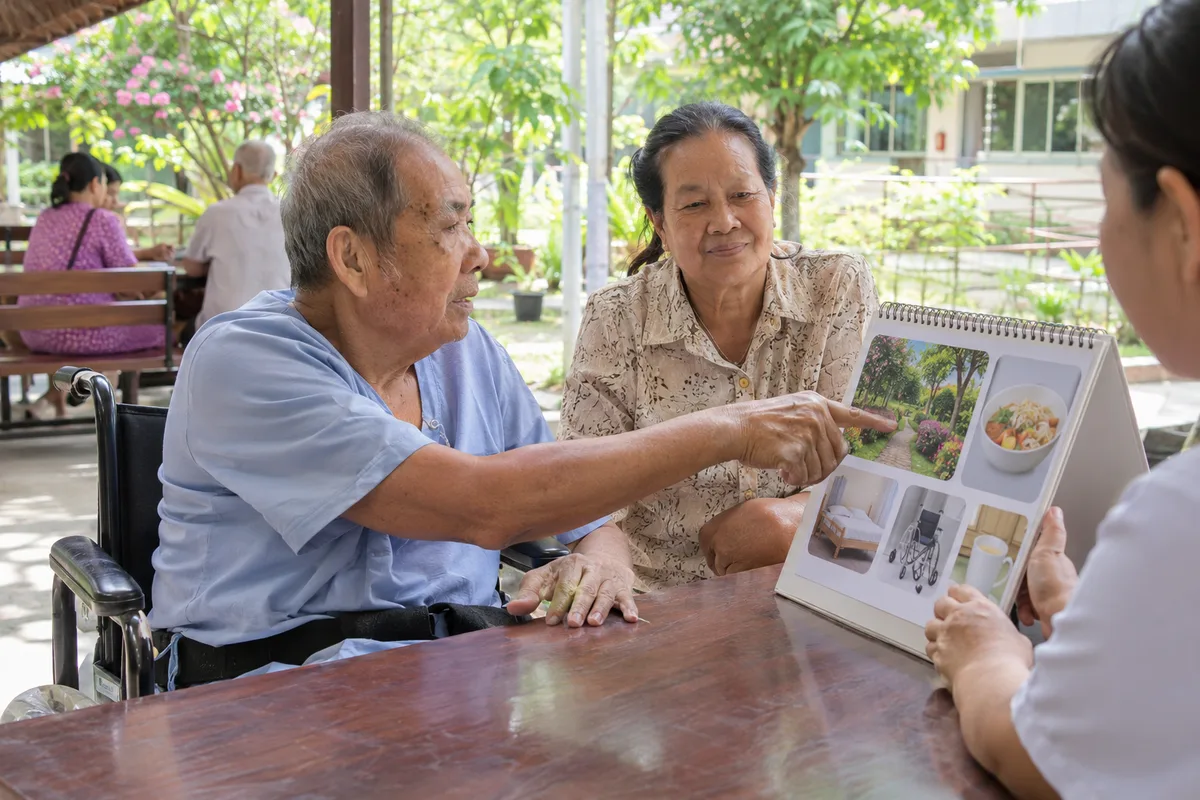
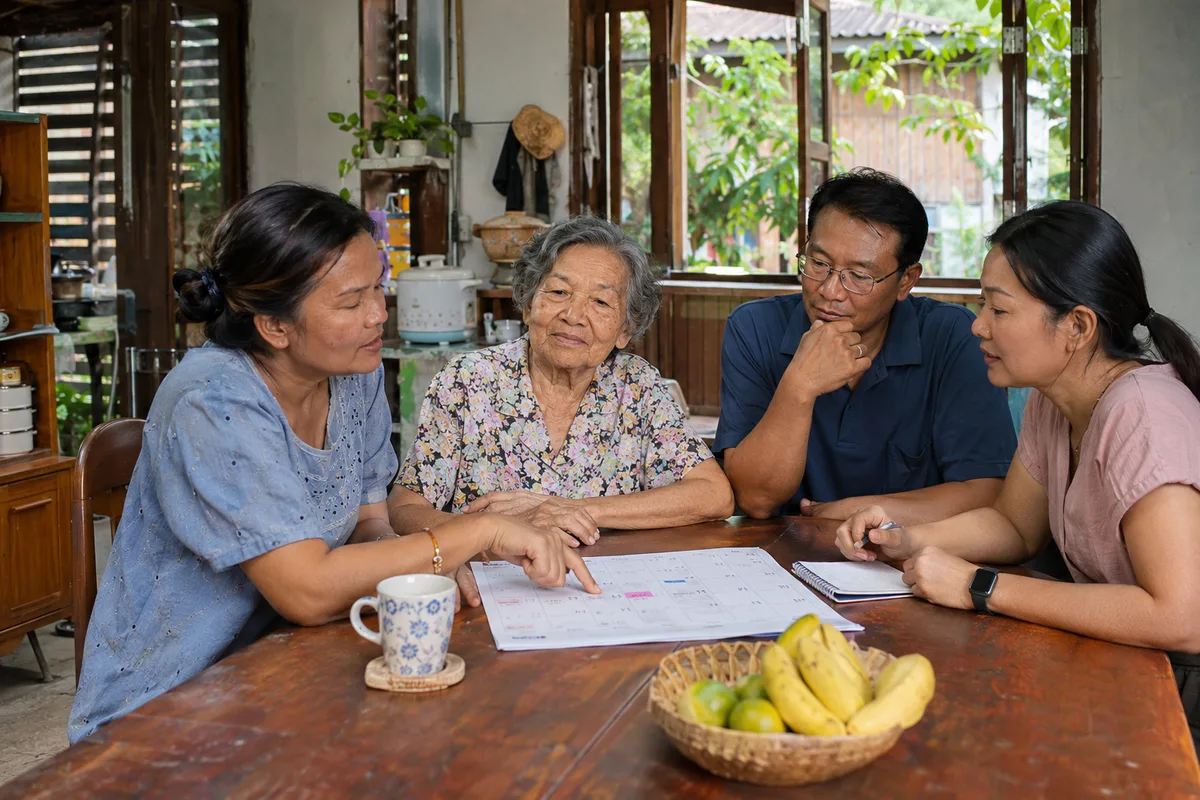
On the drive to the hospital, a daughter can think of five things to ask. When the doctor invites her father to speak, he says he has been much the same. Only on the drive home does he mention what is really on his mind. Will he manage the walk into the temple for his grandson’s ordination next month? His appointment started with his daughter’s concerns and ended before he could bring up his own. Preparing for the next visit can start at the kitchen table with a single question about what he would like to know. [1] MedlinePlus
Write the goal in your parent’s words
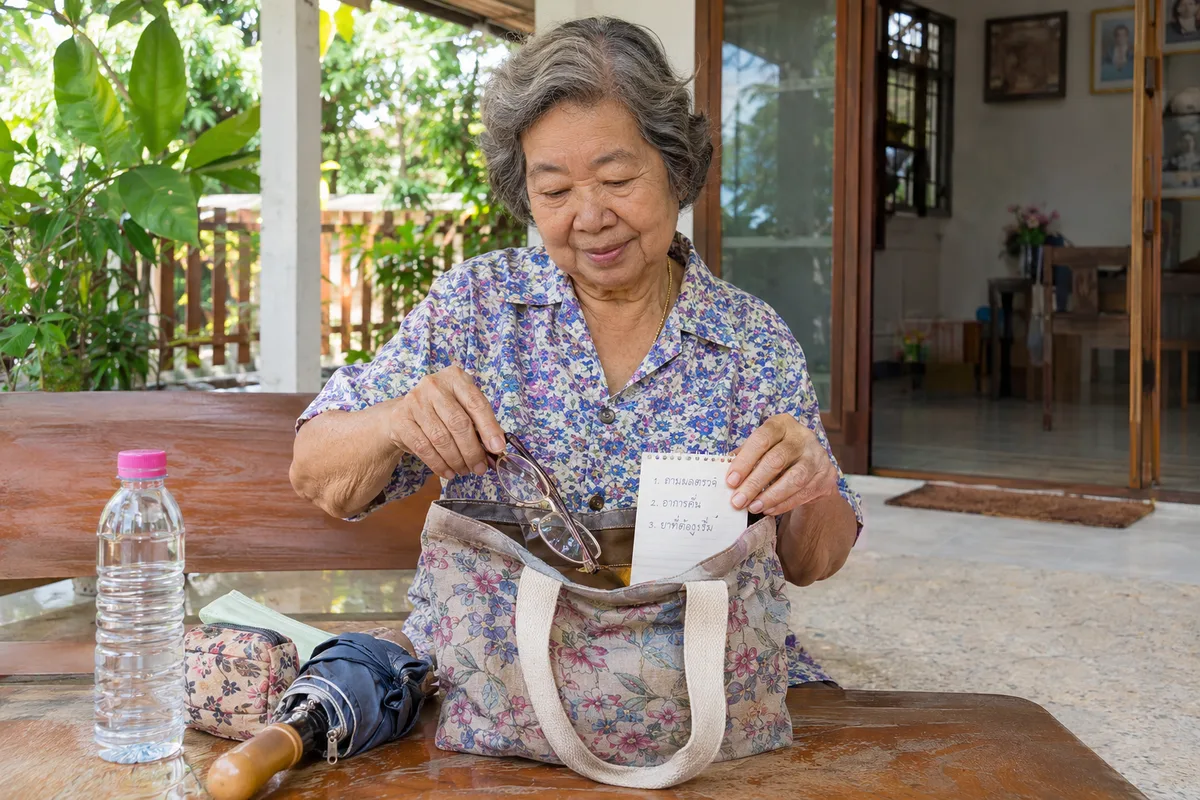
Invite Dad to describe an activity he wants to return to or a difficulty that matters in his day. “I want to walk from the morning market car park to my usual stall” tells the clinician something a general wish to feel better cannot. Write down his actual words. If you also want to ask about a test result, give it a separate line and agree which question comes first. Use a card he can hold and read. A long diary in a bag offers little help if neither of you opens it before the visit ends.
Tell the story of one episode
Think about the last time the difficulty occurred. When did it start? What was Dad doing, how long did it last, and what happened next? On Saturday he had to stop halfway between the main road and the house, a distance he usually walks without a break. If the date is uncertain, say so. Tell the clinician if the difficulty is new, happens repeatedly or has changed. There is no need to reproduce the symptom at home or settle on a diagnosis together. Describing a real event gives the clinician a place to start asking questions. [1] MedlinePlus
Agree when the companion will speak
Dad may want to talk about watering his plants while you want to mention the extra breaks he has been taking. Agree on a cue before going in. He could start with the garden and invite you to describe Saturday if he forgets. Give him time to finish and leave a pause before adding anything. Two different recollections are worth hearing. Dad knows what he felt, and you may remember that a neighbour had to give him a lift home. Tell the clinician who experienced or witnessed each part rather than settling an argument about whose memory is right.
If a witness cannot attend and Dad agrees, ask them for a short account of what they saw and identify who wrote it. Dad can choose when to show the note. Ask the clinic how it wants to see any photos or other records before passing a private document around a family group.
Ask about practical details that change the day
Check the building, arrival time and any instructions for the scheduled visit or tests. Ask the service directly about preparation if a slip is unclear. A neighbour’s experience cannot tell you whether Dad should fast or change the way he takes a medicine before this particular appointment. Ask early about drop-off points, wheelchair access, communication support or an interpreter if needed. Keep his usual glasses and hearing aid where he can use them during the conversation. Collect any documents the clinic requested in one envelope so the rest of the bag can stay in the car. [1] MedlinePlus
If the question concerns how to take a medicine, place the shared medication list beside your notes so you can point to the right item.
Make room for a private conversation
A person who wants a lift and help taking notes may still want a few minutes alone with the clinician. Urinary problems, mood and sexual health can be hard to discuss beside a son or daughter. Agree beforehand how Dad will signal that he would like privacy. You can explain that you will wait nearby and come back when he wants a note taken. Afterwards, ask what he wants shared with other relatives. Offering privacy is something a companion can do even when the appointment is short and everyone has travelled a long way.
Ask what a proposed test will help decide
Find out what question the test addresses, what different results could mean for the next decision and whether preparation or help afterwards is needed. Ask in everyday terms. Can Dad return on his own, or should someone arrange time off? Will he need to come on more than one day? If travel time, expense or the distance between buildings matters, say so while the arrangements can still be discussed. Ask the clinician to write down an unfamiliar term or explain it with an example. You can also ask about the benefits and risks of the available options. [1] MedlinePlus
Find out what should bring the next contact forward
Before leaving, ask what you can observe at home, what change warrants an earlier call and what situation needs emergency help. Explain that Dad is alone in the afternoons or that a trip into town takes several hours, if that affects how the instructions will work. An appointment in the diary is for planned follow-up. If he develops sudden severe chest pain or serious difficulty breathing, seek emergency help immediately. Knowing the clinic’s routine callback arrangements is useful for other questions, but for a medical emergency in Thailand, call 1669. [2] สำนักงานหลักประกันสุขภาพแห่งชาติ
Three lines for a trip to the temple
Imagine that Mod’s father writes down his wish to walk from the car to the ordination hall. On the next line he records when he last had to stop. On the third he asks how to plan for the day. Mod can add that the parking area is far away and there are steps at the entrance. The clinician now understands the practical decision behind the visit and can discuss what else needs assessment. The note gives the family a useful conversation. Only an individual assessment can establish whether that journey is appropriate for him.
Explain tomorrow’s plan back in your own words
Tell the clinician what you understand Dad will do tomorrow. Ask them to correct anything you have missed. Write down where results will appear, who is expected to contact whom and which number to use if the agreed date passes without news. If you stepped out to deal with paperwork, ask whether written instructions are available. At home Dad can choose the reminder he wants beside his calendar. Information about a sensitive concern can stay somewhere private. A date on the wall and the reason for a test do not always need the same audience. [1] MedlinePlus
Give unfinished questions a destination
If there was time for only one concern, ask how to take up the others. The clinic may suggest another appointment, a conversation with a nurse or discussion at a later review. Ask what changes would make an earlier conversation necessary. As you walk back, ask whether Dad got the answer he needed about the ordination. If the answer depends on a further assessment, record who will book it and when you can revisit the travel question. A clear next step can help him plan even while the final answer is still open.