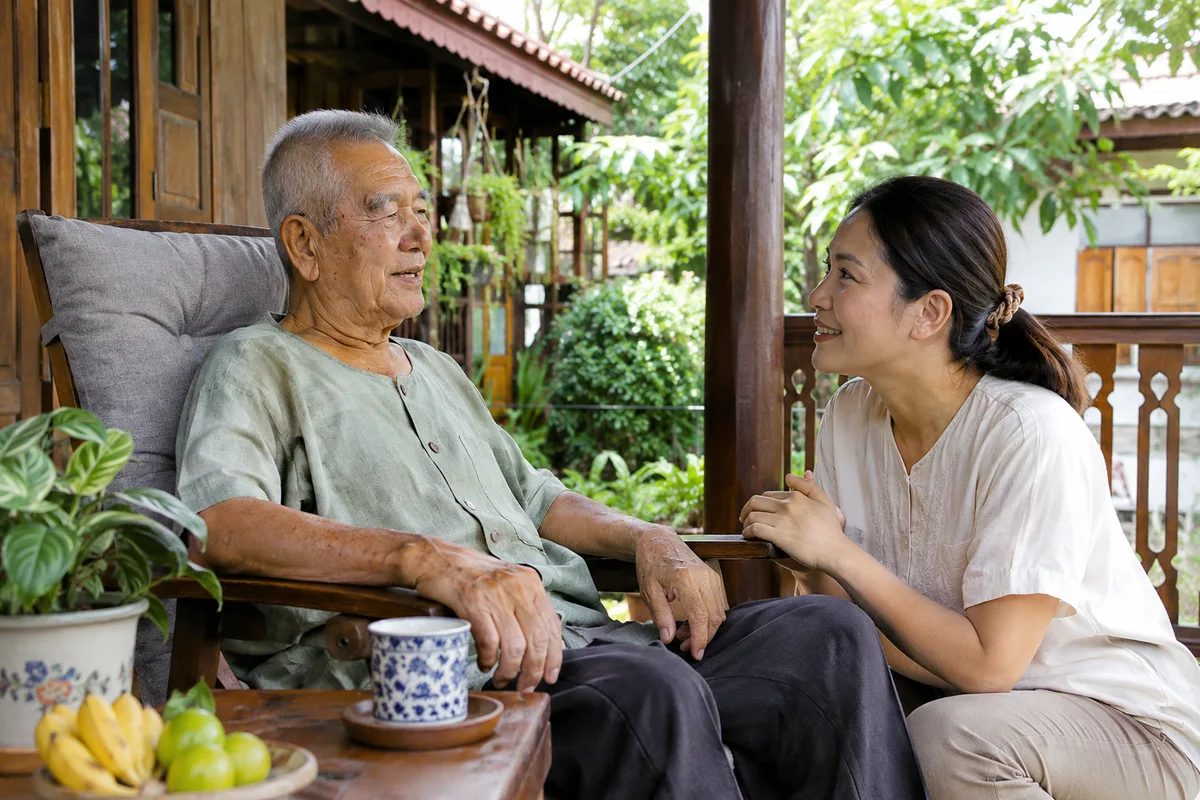

Illustrative scene created for this article.
After the funeral, the children have to go back to work. A house that was full of voices falls quiet. Grandpa walks out to buy two portions of fried dough, just as he did for Grandma every morning. It is only when he reaches the table that he remembers he is eating alone. Losing a partner changes the practical details of a life shared for decades as well as how it feels. Some mornings the most helpful thing a relative can do is share the fried dough and let Grandpa decide whether to talk about Grandma or the rain.
Say what you mean if words are difficult
“I miss Grandma too. Would you like me to sit with you?” gives him a choice between conversation and quiet company. If he tells a familiar story again, listen for what he is remembering today. Yesterday it was the day they met. Today it might be her knack for remembering every neighbour's name. If he does not want to talk, there is no need to press him to express feelings so he can feel better quickly. Stay for the time you have agreed and tell him when you will next call.
Tears do not measure how much someone loved a partner
Someone may cry on opening a wardrobe, feel numb or angry, or laugh with a grandchild and be startled to discover they still can. Feelings after loss can arrive in waves, without following a common timetable. A day when Grandpa manages lunch with friends does not set a deadline for sadness to end. A day spent quietly at home does not mean he will never want another visitor. Ask about what he needs today without using the previous week as evidence of how he ought to feel by now. [1] Cruse Bereavement Support [2] NHS
Offer something easy to accept or decline
“Call me if you need anything” is kindly meant. On a day when it is difficult to concentrate, an open-ended offer may be hard to use. Try something smaller: “I'm going to the market tomorrow. Shall I bring eggs and sticky rice?” Or offer a choice between a lift to an appointment and company for lunch on Wednesday. Let him change his mind and make it clear that wanting time alone is fine. If he accepts, turn up when you said you would. A small, dependable arrangement can give shape to an unfamiliar day.
Once the first wave of visitors has passed, ask what kind of contact feels meaningful, such as a call after supper or a regular weekly visit.
Find the jobs his partner used to do
Grandma may have remembered clinic dates, known where the rice was kept or made the evening calls to relatives. Talk through an ordinary day together and ask where things have become difficult. Choose one task first. If Grandpa wants to learn how the rice cooker works, let him press the buttons with someone beside him. If he would rather have supper brought for now, ask where he would like to eat. Having a say in these small arrangements can help him remain the person in charge of his home while so much else changes. [1] Cruse Bereavement Support
Ask before moving a partner's belongings
A daughter may want to put Grandma's shoes away, afraid that they upset him. For Grandpa the shoes by the door may make the house feel familiar. Unless there is an immediate practical or safety problem, ask him before moving, giving away or discarding something meaningful. He might want to keep a scarf within reach and give books to his partner's friends straight away. He can change his mind. Keep track of anything that goes into temporary storage so that accepting help with the house does not leave him facing another unexpected loss.
Plan for the dates that matter to him
Songkran, a partner's birthday or an ordinary Wednesday afternoon once spent at the market may be especially hard. Ask in advance whether he wants company, to make merit, pray, play a favourite song, cook a remembered dish or let the occasion pass quietly. Follow his beliefs and preferences. Relatives can remember the same person in different ways. If he agrees to a gathering, arrange a way to leave early or sit somewhere quiet, without having to explain his decision in front of everyone if it feels harder on the actual day. [1] Cruse Bereavement Support
Help a friend offer an outing he can manage
Imagine a neighbour wants to invite him to the tea shop but is unsure whether to mention Grandma. Ask Grandpa first what he would like the neighbour to know. A short visit at a quiet time, with the option to leave when he chooses, might be welcome. If he declines the first invitation, find out whether to ask again or wait for him to call. Eating alone most days does not necessarily make a crowded gathering comfortable. Sitting at a table for two with a familiar person may be plenty for the week.
Stay in touch across provinces
Agree a comfortable time to call. On some days you might leave the line open while you both eat. On others, a photograph of new leaves on the tree he gave you may feel more natural than another question about his sadness. With his agreement, a neighbour might visit when family cannot travel. Decide together when it would be helpful for the neighbour to contact you. Include Grandpa in the arrangement so that he knows who is coming and does not feel that everyone has begun reporting on his day behind his back.
Seek support when distress makes daily life difficult
If he can barely eat or sleep, struggles with personal care, feels increasingly low or anxious, or says he wants help, offer to arrange a visit to a doctor or mental health professional. There is no need to wait for a particular anniversary. Go along if he wants company, describe the changes you have noticed and give him room to speak for himself. Take any mention of self-harm seriously and seek help promptly. If there is immediate danger, stay with him if safe to do so and get emergency help at once. [1] Cruse Bereavement Support [2] NHS
Make the next arrangement before the last visitor leaves
It might be a Saturday visit to change a light bulb and share lunch, or simply a call after he has had a few days to himself. Those offering help may also be grieving for a mother or grandmother. Share the practical jobs and find someone with whom you can talk too. Grandpa's relationship with Grandma may continue to have a place in his stories, his cooking and the silence of certain mornings. Being alongside him does not require deciding when those reminders should disappear or when he should be ready to do more.