
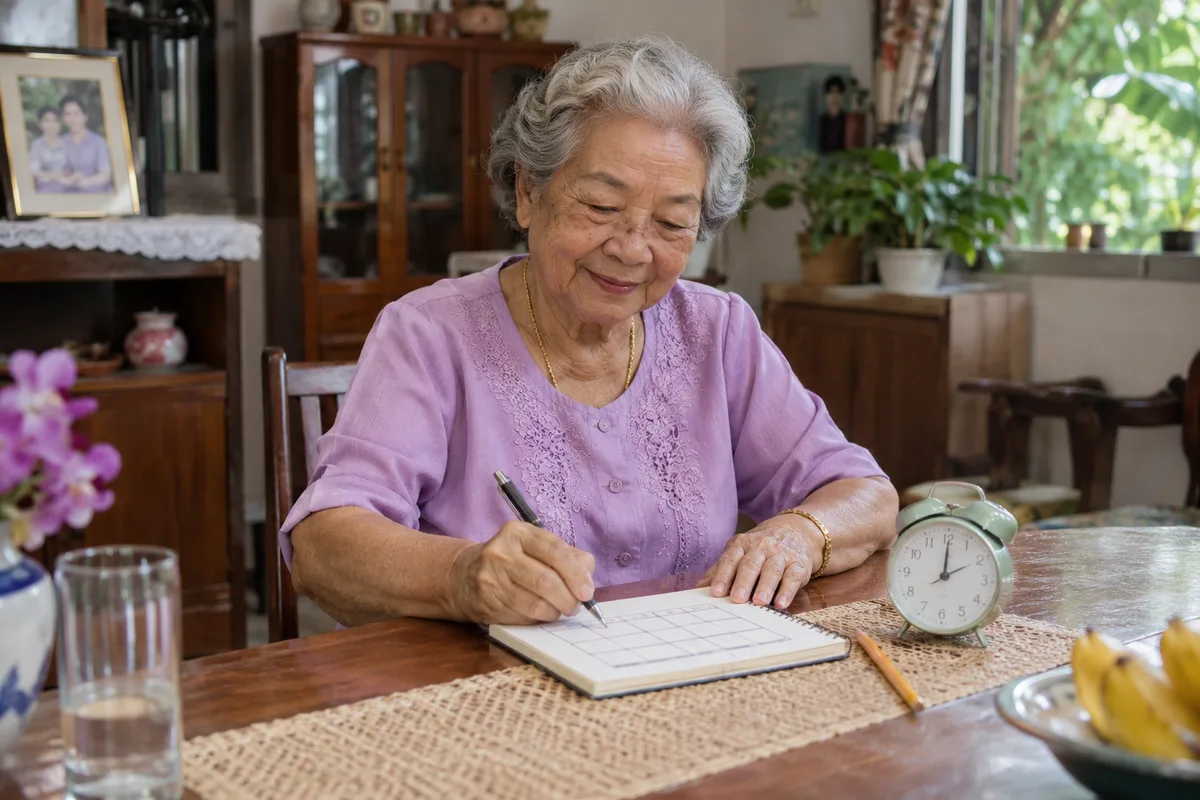
Illustrative scene created for this article.
Mum always asks for the aisle seat in the minivan. Her daughter thinks she likes the view. Then Mum starts asking when the driver will stop, and eventually turns down invitations altogether. She may be worried about reaching a toilet in time. Choose a moment when you are alone and ask, “Is there anything I could arrange that would make the trip easier?” If she wants to talk about leakage, you can explore the choices together, including a visit to a healthcare professional. The outing she misses is a good place to begin. [2] National Institute of Diabetes and Digestive and Kidney Diseases
Two wet patches can have quite different stories
Urine may leak when someone coughs, laughs or lifts something. Another person feels a sudden urge and cannot reach the toilet. A third knew they needed to go but had to wait for help to stand. Changes in health, some medicines, constipation and difficulty moving can all be relevant to the assessment. Describe the sequence without deciding what condition the person has. Two people waiting outside the same clinic with similar-looking symptoms might need quite different help once the clinician hears what was happening just before the leak. [1] National Institute of Diabetes and Digestive and Kidney Diseases [2] National Institute of Diabetes and Digestive and Kidney Diseases
Symptoms that should not wait for a completed diary
Seek medical help immediately if the person cannot pass urine, especially with pain or fullness in the lower abdomen. Contact a healthcare service promptly about blood in the urine or painful urination, mentioning fever or a rapid change if present. Explain when it began and what the person is experiencing now. Repeated leaks, unusually frequent urination or waking to go so often that sleep suffers also deserve an appointment. There is no need to collect several days of perfect notes before seeking appropriate care. [2] National Institute of Diabetes and Digestive and Kidney Diseases
Let the person choose who keeps the notes
Ask whether Mum would like to write, dictate to one person she trusts, or simply tell the clinician herself. A small notebook in a drawer may work better than a chart on the refrigerator. If she uses a phone, agree who can see the file. Her own phrases, such as “a little leak” or “changed my trousers,” are perfectly serviceable. Avoid asking for details while visitors are present or taking pictures of clothing. If she does not want to write anything today, she can still bring her concerns to the clinic.
What to put on one page
A bladder diary commonly covers two to three days before assessment. Note when the person drinks, what they drink and the approximate amount. Record toilet visits, the amount passed if practical to measure, an urgent need to go, and any leakage. Add what the person was doing at the time, even if it was simply waiting outside an occupied bathroom. Follow the clinic’s form and timing if it supplies them. “About half my usual glass” or “amount unknown” is preferable to a precise number that nobody actually measured. [1] National Institute of Diabetes and Digestive and Kidney Diseases
Before the appointment, invite your relative to pick one entry from the diary and prepare a question for the clinic visit in their own words.
Make sense of the family’s different glasses
Dad’s “glass of water” may be the small one for taking tablets. His daughter uses the same word for a tall iced-coffee tumbler. To make notes clearer, measure the usual glass once when convenient and write its size on the first page. Keep the ordinary routine. Drinking extra to test the bladder or withholding drinks to improve the record changes the day you are trying to describe. Anyone already following an individual fluid plan should keep following it and ask the clinical team before making changes.
An example that opens up several questions
An imagined entry reads, “Two o’clock, half a glass of tea. Half past three, suddenly needed the toilet. Waited for my grandson to bring my walking stick. Leaked before the door.” This does not establish that tea caused the leak. It does give the clinician both the timing and a practical obstacle to ask about. A leak the next day during a sneeze near the toilet belongs on its own line. Leave a gap when no one remembers the time. Guesswork can make different days look misleadingly alike.
Follow the route from the armchair to the toilet
Walk the route together when there is no hurry. Ask the person which part takes longer than expected. A stiff handle, awkward clothing or a walking aid left out of reach may be the first thing they mention. Let Mum decide which change she wants to try and how she would like to ask for help when there are guests. In a care home, ask how to reach the call bell from her usual chair and whom she can alert if she is waiting. A discreet way to ask may matter more to her than constant company.
Take one personal goal to the appointment
Bring the diary, a list of medicines including non-prescription products and any relevant changes in bowel habits. Explain when the problem started, whether it has happened before, how often sleep is interrupted and what the person now avoids. Depending on the history, a clinician may suggest an examination or urine test. If symptoms changed after a medicine was introduced, give its name and the time the person takes it. Ask the prescriber before changing a dose or its timing, particularly when another condition already has an agreed treatment schedule. [1] National Institute of Diabetes and Digestive and Kidney Diseases [2] National Institute of Diabetes and Digestive and Kidney Diseases
If Mum uses absorbent products, let her choose whom to ask privately about fit, skin comfort and how to change when away from home. She may prefer to put spares in a particular pocket she can reach herself. That small decision can make a long clinic wait easier and keep personal care in her own hands as far as possible.
Keep outings possible while arranging help
Mum might choose an hour at a nearby temple as her first trip. Her daughter can ask where the nearest accessible toilet is, where the car can collect them and whether there is a seat along the route. Mum can choose the supplies she wants to take and who will carry the bag. Afterwards, ask which arrangements worked and where she still felt uncomfortable. These practical decisions can make the day possible while waiting for assessment, without requiring an explanation to everybody on the trip.
Decide together when the notebook has done its job
After the appointment, ask how long to continue recording, which changes to watch for and when to contact the team before the next visit. One person wants to buy vegetables without rushing home halfway through a stall. Someone else wants to settle back to sleep more easily after a night-time visit. Write that goal in their words. If the family is exploring residential care, use only what the person agrees to share when asking about discreet toilet assistance, the help available at night and how privacy is maintained.